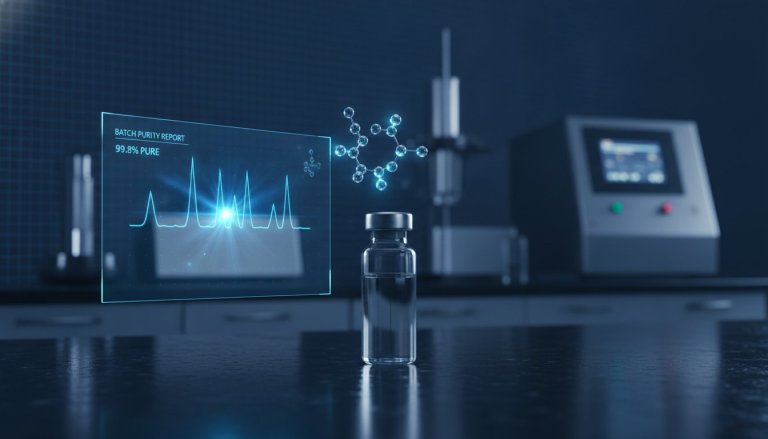

Procuring Research Chemicals: A Verification Guide
Research integrity depends on batch-specific verification, not catalog size. High-purity compounds are the foundation of reproducible data. You likely find that unreliable purity reports and long international shipping delays are unacceptable risks to your project’s timeline. Sourcing research chemicals for laboratory use requires a disciplined approach to quality control and regulatory compliance. Generic data sheets are insufficient. Precision is mandatory. Our industry often suffers from a lack of transparency, leaving researchers to guess about the actual composition of their materials.
This article establishes a professional protocol for identifying, verifying, and sourcing high-purity compounds for in-vitro and analytical study. We’ll examine the critical role of third-party verification data and the efficiency of domestic logistics in maintaining consistent batch purity. You’ll learn how to evaluate batch-specific Certificates of Analysis to ensure your materials meet strict analytical standards. By prioritizing transparency and procedural rigor, you can eliminate the variables that lead to compromised results. This guide serves as an authoritative framework for researchers who value accountability and scientific accuracy above all else. We prioritize evidence over claims and data over marketing.
Key Takeaways
- Define strict compound classifications to ensure all materials are restricted to in-vitro and analytical study.
- Evaluate technical data from HPLC and Mass Spectrometry to verify molecular identity and batch-specific purity.
- Mitigate logistical risks and customs delays by prioritizing domestic suppliers for research chemicals for laboratory use.
- Implement a procurement protocol focused on vetting supplier verification methodology and third-party partnerships.
- Require batch-specific Certificates of Analysis to ensure consistent quality and research reproducibility across every study.
Defining Research Chemicals for Laboratory Use
Precision defines the modern laboratory environment. When procuring research chemicals for laboratory use, professionals prioritize substances classified strictly for scientific and medical study. These materials aren’t intended for human or veterinary applications. This distinction is critical for regulatory compliance and safety. These compounds are tools for inquiry. They aren’t consumer goods. Every procurement decision must reflect this boundary.
Analytical research requires significantly higher purity thresholds than industrial applications. Trace contaminants can interfere with enzymatic activity or molecular binding. High-integrity data relies on the absence of these variables. Utilizing research grade chemical compounds allows scientists to establish reliable baselines. To understand the broader context, one might ask, What are Research Chemicals? They are specialized substances used to study biological or chemical systems. We provide these materials to support rigorous scientific methodologies.
To better understand the practicalities of chemical procurement, watch this helpful video:
In Vitro vs. In Vivo Research Standards
In-vitro research occurs in controlled, non-living environments such as test tubes or petri dishes. Using in vitro research compounds is the industry standard for early-phase studies. It allows for high-throughput screening without the ethical or physiological complexities of animal models. Regulatory boundaries strictly govern these substances. They are distributed as non-clinical tools. Compliance requires labs to maintain clear documentation that these materials remain within the benchtop environment. This separation ensures that research chemicals for laboratory use never enter the clinical supply chain. It protects the integrity of both the researcher and the institution.
Common Categories of Laboratory Compounds
Researchers typically categorize these materials based on their functional role. Small molecule inhibitors are vital for drug discovery. They modulate specific protein functions to reveal biological pathways. Analytical reagents serve as essential starting materials. High-purity reagents ensure the accuracy of downstream chemical synthesis and calibration. Peptides act as building blocks for complex synthesis projects. These require rigorous verification to confirm sequence accuracy and purity levels. Each category demands specific handling protocols to maintain integrity. Accuracy starts with the selection of the correct chemical class. We ensure every compound meets the specific requirements of its intended analytical category.
Technical Verification: Evaluating Chemical Purity
Verification is the threshold for scientific validity. When procuring research chemicals for laboratory use, generic purity claims are insufficient for reproducible study. High-Performance Liquid Chromatography (HPLC) remains the primary standard for purity assessment. It separates sample components to quantify potential contaminants. Mass Spectrometry (MS) provides necessary confirmation of molecular weight and identity. Without these specific analytical metrics, a compound’s identity remains anecdotal. Manufacturer-issued reports often present a conflict of interest. Independent third-party verification removes this bias. It ensures data integrity through objective analysis. Precision is absolute. Data is non-negotiable.
Interpreting Certificates of Analysis (COA)
A professional analytical grade research compounds report must contain specific, verifiable data points. Researchers must match batch numbers on the physical product directly to the laboratory documentation. Red flags in COA documentation include missing analysis dates, generic signatures, or blurred chromatogram data. These inconsistencies suggest the data might not correspond to the specific batch received. Maintaining a strict procurement protocol is essential; for additional context on regulatory standards, consult NIDA’s Ordering Guidelines for procurement. Every research chemicals for laboratory use order should be accompanied by clear, high-resolution documentation that confirms the material’s profile.
The Role of Independent Third-Party Testing
Self-regulation by manufacturers introduces unnecessary risk to experimental outcomes. Manufacturers might overlook minor impurities to maintain production quotas. Third-party labs provide an objective audit of every unique production batch. This process establishes a clear chain of custody for analytical data. It guarantees that the material in your laboratory matches the data provided by the testing facility. We believe that transparency is the only path to absolute reliability. Rigorous verification cycles ensure that every compound meets its stated specifications before it reaches your bench. For those requiring documented precision, you can review our batch-specific verification standards to see how we maintain these rigorous requirements.
Sourcing Logistics: Domestic vs. International Suppliers
Logistical precision is the final safeguard for research integrity. International transit forces compounds through environments beyond a researcher’s control. Temperature fluctuations and improper handling during long-haul freight can trigger molecular degradation. This risk is especially acute for sensitive research chemicals for laboratory use. Domestic logistics mitigate these variables. We prioritize U.S. domestic shipping to maintain a secure chain of custody. Real-time tracking isn’t a convenience. It’s a requirement for modern laboratory procurement. It provides the transparency needed to schedule analytical phases without the uncertainty of customs delays.
Customs seizures represent a total loss of time and resources. International packages often face weeks of stagnation in processing facilities. This delay stalls project timelines and compromises the stability of reactive compounds. Procuring research chemicals for laboratory use from domestic sources ensures that the material you receive is exactly what was tested in the lab. Researchers often cross-reference molecular properties with the PubChem chemical database to ensure the received batch aligns with established standards. Domestic sourcing makes this verification process faster and more reliable.
Advantages of U.S. Domestic Shipping
Transit times drop from weeks to days. This efficiency is vital for critical research needs that require immediate material replacement. Buyers don’t face import duties or complex regulatory paperwork. Accountability is significantly higher. Domestic vendors operate under U.S. commercial law, providing a clear path for recourse if materials fail verification. We focus exclusively on the U.S. market to ensure these standards are met without exception. Speed and legal accountability are the foundations of a professional procurement strategy.
Supply Chain Transparency and Reliability
Verify the physical location and inventory status of your supplier before placing an order. Many international aggregators lack actual inventory, acting only as intermediaries. Domestic sourcing directly supports the stability of high purity research peptides. These compounds are often sensitive to environmental shifts and require short transit paths to minimize exposure. Real-time inventory management prevents backorders that stall research progress. We maintain physical stock in the U.S. to ensure immediate dispatch. Reliability depends on a predictable and transparent supply chain.

How to Implement a Laboratory Procurement Protocol
Scientific rigor begins before the first experiment. A disciplined protocol for sourcing research chemicals for laboratory use transforms procurement from a logistical task into a quality assurance phase. This process eliminates the variables that compromise data. Standardizing your approach ensures that every compound entering the lab meets strict analytical thresholds. It’s a methodical progression from defining needs to verifying results. Consistency is the only path to reproducible outcomes.
- Step 1: Define Requirements. Specify the exact purity thresholds and molecular identity markers needed for your analytical study.
- Step 2: Vet Methodology. Confirm the supplier’s reliance on third-party verification rather than internal, self-regulated claims.
- Step 3: Review Documentation. Request and analyze batch-specific Certificates of Analysis (COAs) before any financial commitment is finalized.
- Step 4: Execute Procurement. Utilize secure channels with established shipping expectations to maintain the chain of custody.
Compliance is mandatory. Efficiency is expected. Following these steps ensures your laboratory operates with high-integrity materials. To begin establishing your supply chain with verified materials, you can access our verified research compounds directly.
Managing Bulk Procurement for Scale Studies
Scale studies require sophisticated inventory management. Maintaining batch consistency across a long-term project is a common challenge for many institutions. We recommend leveraging Bulk Discount Packages to secure the necessary volume from a single verified batch. This practice prevents the introduction of batch-to-batch variance in your data. Proper storage is equally critical. Post-delivery, compounds must be kept in temperature-controlled, light-shielded environments to prevent degradation. We provide the technical data needed to establish these local storage protocols. Consistency remains the foundation of scale.
Ensuring Secure Transactions and Data Privacy
Proprietary research demands absolute confidentiality. Identifying secure checkout protocols is the first step in protecting your laboratory’s procurement data. We utilize encrypted payment gateways to ensure that sensitive financial and project information remains private. Data security is a professional standard. Beyond the transaction, clear communication channels are essential. Technical support should be readily available to address questions regarding batch data or analytical methods. We prioritize transparency in every interaction. Your research privacy is a core operational value. Secure systems build professional trust.
The JM Precision Labs Standard for Research Chemicals
Scientific accountability is the foundation of our operational model. We reject the typical hyperbole of the e-commerce industry. We opt instead for a grounded approach that prioritizes scientific rigor. For every batch of research chemicals for laboratory use, we implement a strict third-party verification protocol. This is not an optional service. It’s a core requirement for every compound we distribute. We provide batch-specific documentation as a non-negotiable standard. Generic reports are insufficient for professional inquiry. Precision is absolute.
Transparency drives our methodology. We build trust through procedural standards rather than emotional appeals. Our communication is direct. Our data is verifiable. We act as an authoritative guide for researchers who value ethical standards and procedural accuracy. Every sentence we publish serves to move the researcher from a requirement to its supporting evidence. This meticulous focus ensures that your laboratory receives materials that meet the highest analytical standards available in the domestic market.
Commitment to Analytical Integrity
Our selection process is disciplined. We maintain a catalog of 16+ compounds specifically chosen for their utility in in-vitro and analytical studies. We prioritize transparency over hyperbole in every technical description. This ensures that researchers have the data needed to establish accurate baselines. You can access our database of Certificates of Analysis for your specific batch at any time. This database contains the HPLC and Mass Spectrometry results required to confirm molecular identity and purity levels. We verify every unique production batch. We don’t rely on manufacturer claims. We rely on independent data.
Streamlined Logistics for U.S. Researchers
Logistical precision is essential for maintaining project timelines. We optimize our entire supply chain for U.S. domestic researchers. This focus eliminates the complexities of international duties and customs seizures. We provide 24-hour processing for all orders. Real-time tracking is standard. It allows for precise laboratory scheduling. We offer free shipping on orders over $200 to support the requirements of scale studies and bulk procurement. Our pricing is direct. There are no hidden fees. We are a U.S.-based specialist dedicated to supply chain integrity. Procure verified research compounds from JM Precision Labs today.
Advancing Analytical Standards with Verified Compounds
Establishing research integrity requires more than just access to a catalog. It demands a rigorous verification framework that prioritizes analytical data over marketing claims. By implementing a strict procurement protocol, you ensure that every material entering your facility meets the necessary purity thresholds for in-vitro and analytical study. High-integrity research depends on the elimination of variables. Batch-specific Certificates of Analysis and third-party verification provide the evidence required to confirm molecular identity and consistency. Transitioning to domestic sourcing for research chemicals for laboratory use further protects your project timelines from the uncertainty of international transit and customs seizures.
Reliability is an operational choice. We provide the technical assurances and logistical efficiency needed to support your most critical studies. You’ll find that our commitment to transparency and procedural rigor sets a professional standard for the industry. Secure Your Verified Research Compounds today and benefit from third-party verified purity, batch-specific COAs, and fast U.S. domestic shipping. We look forward to supporting your next breakthrough with precision and accountability.
Frequently Asked Questions
What are research chemicals for laboratory use?
Research chemicals for laboratory use are specialized compounds intended strictly for in-vitro and analytical study. These substances allow scientists to investigate biological pathways or chemical properties in controlled environments. They aren’t consumer products. Their classification restricts them to scientific and medical research settings. Maintaining this boundary is essential for institutional compliance and laboratory safety. Every compound must be handled according to professional laboratory standards.
Are research chemicals legal for human consumption?
No, research chemicals are never legal for human or veterinary consumption. These materials are classified as non-clinical substances for benchtop use only. Their chemical profiles and purity levels are optimized for analytical research, not for physiological administration. Any deviation from this intended use poses significant safety risks and violates the terms of professional procurement. We maintain a strict policy against use outside of laboratory settings.
How can I verify the purity of a research chemical?
Purity verification requires the analysis of batch-specific data generated through HPLC and Mass Spectrometry. High-Performance Liquid Chromatography quantifies the presence of impurities. Mass Spectrometry confirms the molecular identity and weight. You should match the batch number on your product label directly to the corresponding laboratory report. This process ensures the material’s composition aligns with your specific analytical requirements. Objective data is the only path to verification.
What is a Certificate of Analysis (COA) in chemical sourcing?
A Certificate of Analysis (COA) is a technical document detailing the analytical results for a specific production batch. It serves as a verification of the compound’s identity and purity level. A professional COA includes the analysis date, batch number, and high-resolution chromatograms. Researchers review these reports to establish baselines before beginning a study. It’s a non-negotiable standard for ensuring consistency across different stages of analytical research.
Why is domestic U.S. shipping better for research compounds?
Domestic U.S. shipping ensures supply chain integrity by minimizing transit time and environmental exposure. International transit often leads to molecular degradation due to temperature fluctuations or handling errors. Sourcing research chemicals for laboratory use from a domestic specialist eliminates customs delays and import duties. It also provides a clear framework for legal accountability. Reliable logistics are essential for maintaining the stability of sensitive compounds.
Do you offer bulk discounts for large laboratory orders?
Yes, we offer Bulk Discount Packages to support scale studies and long-term analytical projects. Bulk procurement allows researchers to secure the necessary volume from a single, verified production batch. This practice minimizes batch-to-batch variance, which is critical for maintaining data integrity over time. We provide tiered pricing structures that prioritize research efficiency without compromising on our rigorous verification standards or documentation requirements.
What does ‘third-party verified’ mean for research chemicals?
Third-party verified means that an independent, external laboratory has analyzed the compound to confirm its purity and identity. This process removes the conflict of interest inherent in manufacturer-issued reports. It provides an objective audit of the material’s specifications. We adhere to this model for every compound in our catalog. This standard ensures that the data provided to researchers is accurate, transparent, and fully documented.
Can I track my research chemical shipment in real-time?
Yes, real-time tracking is provided for all domestic orders to ensure logistical transparency. Researchers can monitor the shipment’s progress from our facility directly to their laboratory door. This precision allows for efficient project scheduling and resource allocation. We utilize established domestic carriers to maintain a secure chain of custody. Real-time updates eliminate the uncertainty associated with international freight and customs processing.
Disclaimer
JM Precision Labs – Research Use Disclaimer
All products offered by JM Precision Labs are intended solely for laboratory research and scientific investigation. They are not intended for human or animal consumption, therapeutic use, diagnostic use, or clinical application.
Products sold by JM Precision Labs are for use only by qualified researchers and laboratory professionals who understand the potential hazards associated with handling research compounds. By purchasing from JM Precision Labs, the customer acknowledges that they are acquiring these products for legitimate research purposes only and agrees to comply with all applicable federal, state, and local laws and regulations.
JM Precision Labs makes no representations or warranties regarding the fitness of any product for any particular purpose beyond laboratory research. Customers assume full responsibility for the safe handling, storage, use, and disposal of all products purchased.
The information provided on this website, product labels, marketing materials, emails, or social media is for educational and informational purposes only and should not be interpreted as medical advice, treatment recommendations, or claims regarding the safety, efficacy, or intended use of any product.
JM Precision Labs shall not be liable for any damages, losses, or claims arising from the misuse, improper handling, or unauthorized use of its products.
By accessing this website and/or purchasing from JM Precision Labs, you acknowledge that you have read, understood, and agree to this disclaimer.