|
|
|

|
Semax: Why Researchers Continue to Study This Nootropic Peptide
|
In neuroscience research, Semax has become one of the most widely studied synthetic peptides due to its potential role in neuroprotection, cognitive signaling, and neuronal plasticity. Originally developed as a modified peptide derived from adrenocorticotropic hormone (ACTH), Semax continues to be investigated for its interactions with the central nervous system in laboratory settings.
|
|
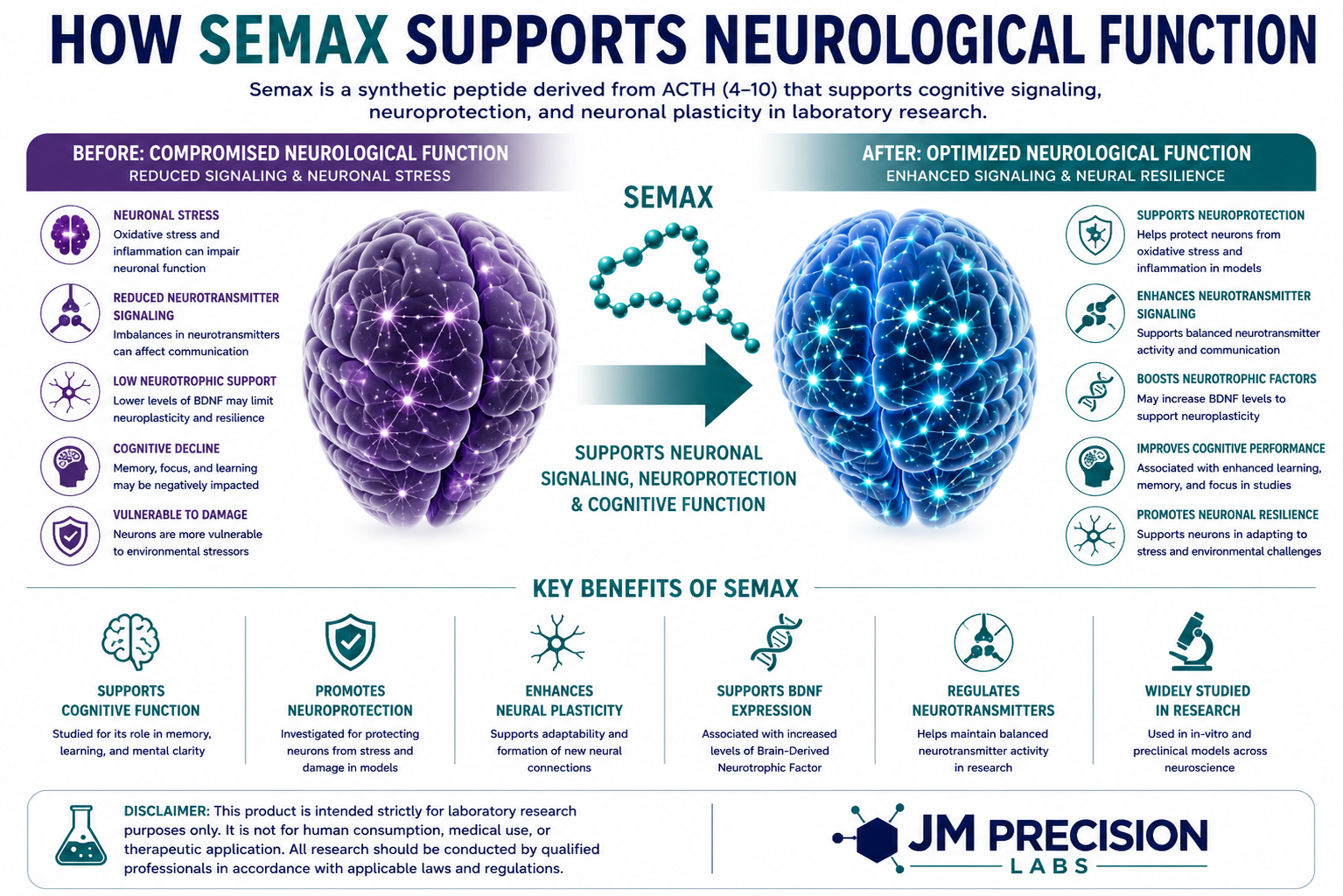
Semax is a synthetic peptide derived from a fragment of adrenocorticotropic hormone (ACTH 4–10) that has been modified to enhance stability and biological activity. Unlike ACTH, Semax does not exhibit hormonal activity but has been studied for its effects on neuronal signaling and cognitive function.
|
In laboratory environments, Semax has been investigated for its interactions with:
|
- Neurotrophic factor signaling
- Neuronal plasticity pathways
- Cognitive processing mechanisms
- Neurotransmitter regulation
|
Why Researchers Are Interested
|
One of the primary reasons Semax has attracted significant research interest is its potential to influence multiple neurological pathways rather than targeting a single mechanism. Researchers continue to investigate its role in supporting neuronal communication and adaptive brain function.
|
Current areas of investigation include:
|
- Learning and memory research
- Neuroprotection models
- Cognitive performance studies
- Stress response mechanisms
- Brain-derived neurotrophic factor (BDNF) signaling
|
Applications in Research Settings
|
Within controlled laboratory environments, Semax is commonly studied in research involving:
|
- Neuroscience
- Cognitive function models
- Neurodegenerative disease research
- Behavioral science
- Central nervous system signaling
Its ability to interact with neurotrophic and neurotransmitter pathways has made it an important tool for researchers studying cognition and neuronal adaptation.
|
- Synthetic peptide derived from ACTH (4–10)
- Studied for cognitive and neurological signaling
- Investigated in neuroprotection research
- Commonly used in in-vitro and preclinical laboratory models
- Associated with neurotrophic and neurotransmitter pathways
Semax continues to be an important focus in neuroscience research because of its broad interactions with neuronal signaling pathways and cognitive processes. As research continues to evolve, its potential role in neuroplasticity and brain function remains an area of ongoing scientific investigation.
|
|
Disclaimer: This product is intended strictly for laboratory research purposes only. It is not for human or animal consumption, medical use, or therapeutic application. BPC-157 is an investigational research compound and has not been approved by the U.S. Food and Drug Administration for any therapeutic use. All research should be conducted by qualified professionals in accordance with applicable laws and regulations.
|
|
|
|
|
|
|