|
|
|

|
|
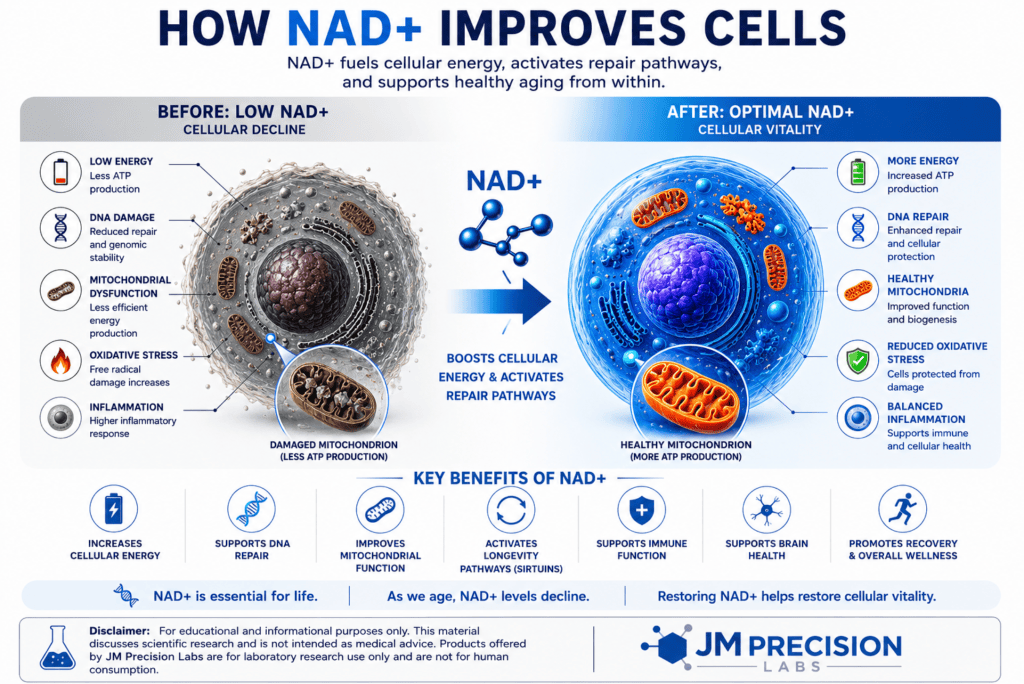
NAD+ (Nicotinamide Adenine Dinucleotide) is a coenzyme found in every living cell and is essential for energy production and normal cellular function. It plays a critical role in converting nutrients into ATP—the primary source of energy used by cells. NAD+ levels naturally decline with age, leading researchers to investigate its role in cellular aging and metabolic health.
|
In laboratory settings, NAD+ has been studied for its involvement in:
|
- Cellular energy production (ATP synthesis)
- Mitochondrial function
- DNA repair mechanisms
- Cellular metabolism and redox balance
- Activation of sirtuin proteins involved in healthy aging
|
Why Researchers Are Interested
|
|
NAD+ is considered one of the body's most important cellular cofactors because it participates in hundreds of metabolic reactions. Rather than affecting a single biological pathway, it supports multiple processes involved in cellular maintenance, energy metabolism, and stress response.
|
Some areas of ongoing research include:
|
- Mitochondrial health and energy production
- Cellular aging and longevity pathways
- DNA repair and genomic stability
- Cognitive and neurological function
- Muscle performance and recovery
- Metabolic efficiency and insulin sensitivity
- Oxidative stress response
|
Applications in Research Settings
|
In controlled laboratory environments, NAD+ is commonly investigated in studies involving:
|
- Mitochondrial dysfunction models
- Healthy aging and longevity research
- Cellular metabolism studies
- Neurobiology and cognitive research
- Exercise physiology and performance models
- Metabolic and energy regulation research
|
Because of its central role in cellular bioenergetics, NAD+ continues to be a key molecule in research focused on understanding how cells produce, utilize, and preserve energy throughout the aging process.
|
- Naturally present in every living cell
- Essential for cellular energy production
- Supports mitochondrial function
- Participates in DNA repair processes
- Activates sirtuin enzymes involved in cellular maintenance
- Studied extensively in aging and metabolic research
- Central to hundreds of biochemical reactions throughout the body
NAD+ remains one of the most extensively studied molecules in cellular biology because of its fundamental role in energy production and cellular maintenance. Its involvement in mitochondrial function, DNA repair, and metabolic regulation has made it a cornerstone of research into healthy aging and cellular resilience. As scientific understanding continues to evolve, NAD+ remains a primary focus in studies exploring how cells generate energy, respond to stress, and maintain optimal function over time.
|
|
Disclaimer: This product is intended strictly for laboratory research purposes only. It is not for human consumption, medical use, or therapeutic application. All research should be conducted by qualified professionals in accordance with applicable laws and regulations.
|
|
|
|
|
|
|