|
|
|
|
GHK-Cu: The Copper Peptide Researchers Are Paying Attention To!
|
|
In the world of regenerative and biochemical research, few small molecules have generated as much interest as GHK-Cu. This naturally occurring copper-binding peptide (glycyl-L-histidyl-L-lysine) is found in human plasma, saliva, and tissue, and has been widely studied for its role in cellular signaling and repair mechanisms.
|
|
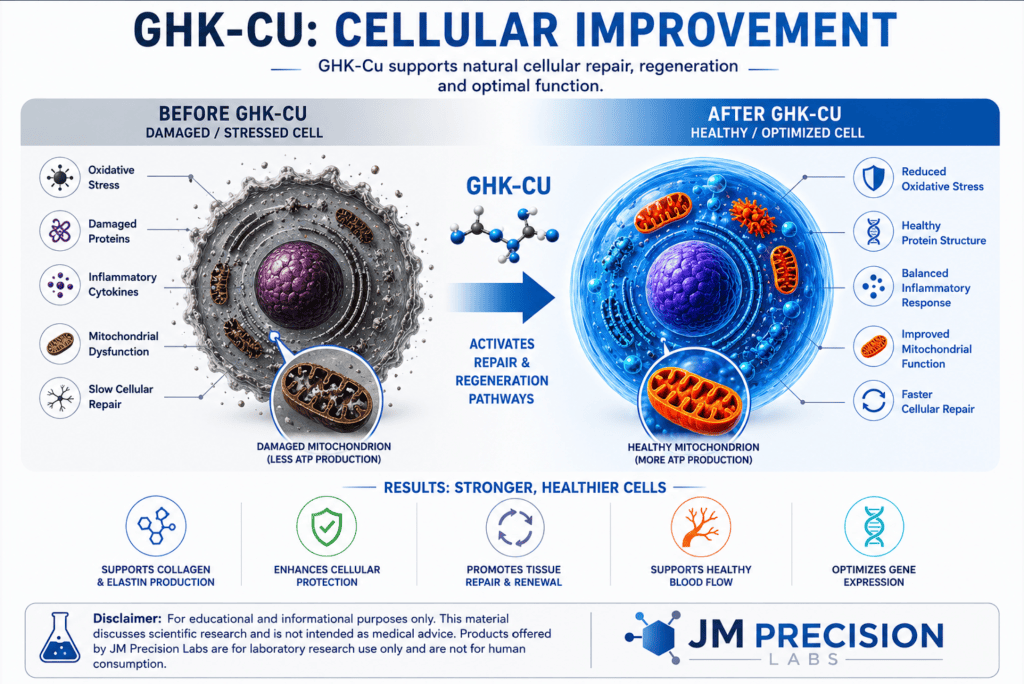
GHK-Cu is a naturally occurring tripeptide that binds with copper ions, forming a biologically active complex. As we age, levels of GHK decline, which has led researchers to explore its potential role in age-related cellular changes.
|
In laboratory settings, GHK-Cu has been studied for its interactions with:
|
- Extracellular matrix remodeling
- Collagen and elastin synthesis pathways
- Wound healing signaling cascades
- Gene expression linked to tissue maintenance
|
Why Researchers Are Interested
|
One of the most compelling aspects of GHK-Cu is its broad biological signaling profile. Rather than targeting a single pathway, it appears to influence multiple regenerative processes at once, making it a frequent subject of interest in dermatological and tissue repair research models.
|
Some areas of ongoing investigation include:
|
- Skin regeneration and structural integrity
- Oxidative stress response modulation
- Angiogenesis (formation of new blood vessels)
- Fibroblast activity and extracellular matrix support
|
Applications in Research Settings
|
In controlled laboratory environments, GHK-Cu is commonly explored in studies related to:
|
- Cellular repair models
- Tissue engineering research
- Anti-aging biomarker studies
- Cosmetic science and dermal restructuring research
Its ability to interact with copper-dependent enzymatic processes makes it especially relevant in studies focused on structural proteins and cellular communication.
|
- Naturally occurring peptide found in human tissues
- Copper-binding structure with biological activity
- Studied for regenerative signaling potential
- Commonly used in in-vitro and preclinical research models
- Linked to multiple pathways associated with tissue maintenance
GHK-Cu continues to stand out as one of the most versatile peptides in biochemical research due to its multi-pathway activity and natural presence in the human body. While research is ongoing, its role in cellular repair and structural support mechanisms makes it a consistent focus in regenerative science studies.
|
|
Disclaimer: This product is intended strictly for laboratory research purposes only. It is not for human consumption, medical use, or therapeutic application. All research should be conducted by qualified professionals in accordance with applicable laws and regulations.
|
|
|
|
|
|
|