|
|
|

|
|
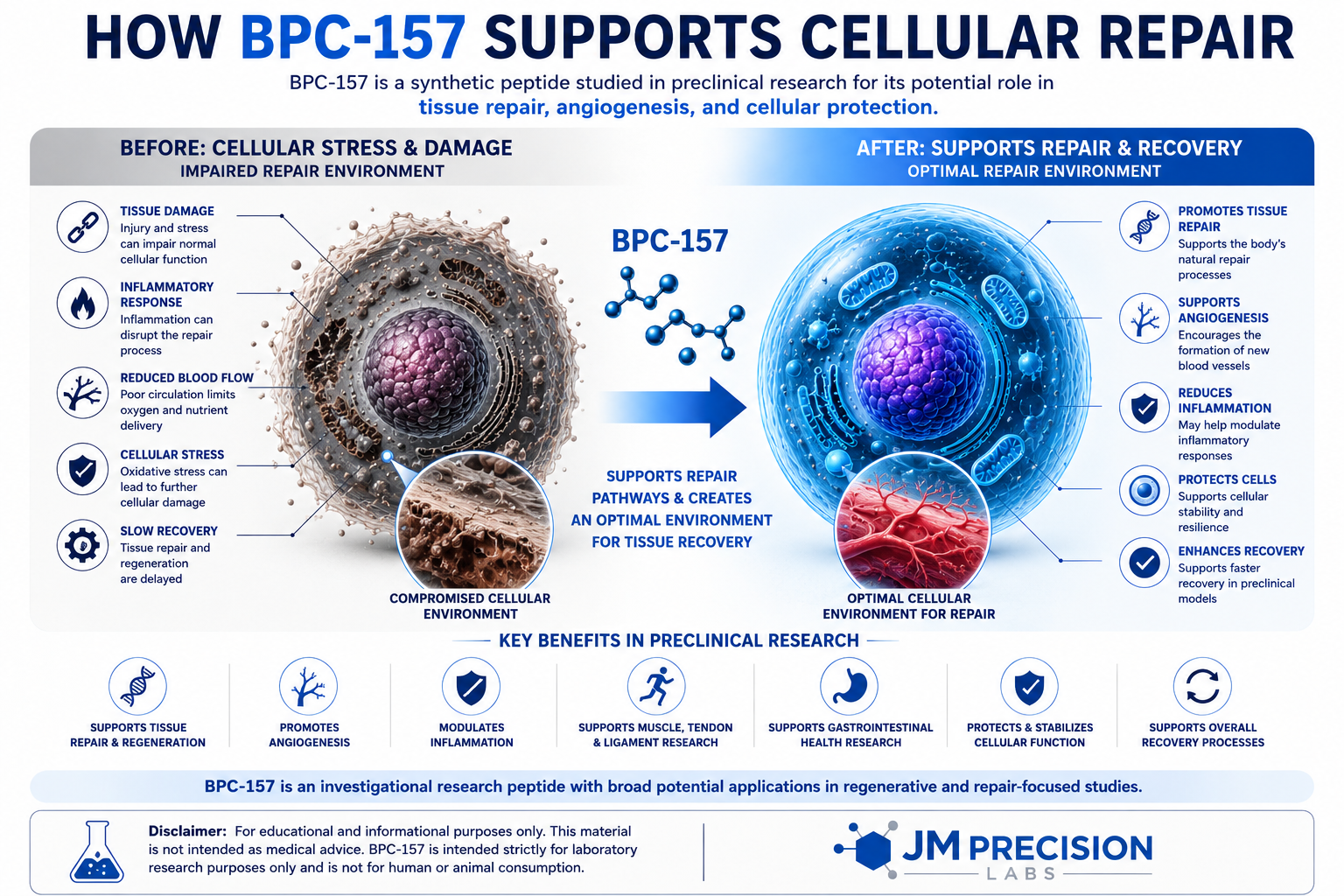
BPC-157 (Body Protection Compound-157) is a synthetic peptide consisting of 15 amino acids. It is derived from a protein sequence originally identified in gastric juice and has become a subject of scientific interest due to its involvement in various preclinical research models. BPC-157 is currently classified as an investigational research compound and has not been approved for medical or therapeutic use.
|
In laboratory settings, BPC-157 has been studied for its potential involvement in:
|
- Cellular repair mechanisms
- Tissue regeneration pathways
- Angiogenesis (formation of new blood vessels)
- Cell migration and signaling
- Gastrointestinal tissue research
Why Researchers Are Interested
|
|
Researchers continue to investigate BPC-157 because it has demonstrated activity across multiple biological systems in preclinical studies. Rather than targeting a single pathway, BPC-157 is being explored for its potential role in cellular communication, tissue remodeling, and biological repair processes.
|
Current areas of research include:
|
- Connective tissue biology
- Tendon and ligament research
- Skeletal muscle regeneration models
- Gastrointestinal research
- Angiogenesis and vascular biology
- Cellular signaling pathways
- Wound healing mechanisms in experimental models
|
Applications in Research Settings
|
In controlled laboratory environments, BPC-157 is commonly investigated in studies involving:
|
- Soft tissue regeneration models
- Musculoskeletal research
- Gastrointestinal biology
- Cellular repair and recovery mechanisms
- Experimental wound healing models
- Angiogenesis research
- Tissue engineering and regenerative biology
As interest in regenerative biology continues to grow, BPC-157 remains an important investigational compound for researchers studying cellular repair processes and tissue adaptation.
|
Key Properties of BPC-157
|
- Synthetic peptide composed of 15 amino acids
- Investigated in tissue regeneration research
- Studied in connective tissue and musculoskeletal models
- Evaluated in gastrointestinal research
- Explored for its role in angiogenesis and cellular signaling
- Commonly used in regenerative biology research
- Continues to be investigated in preclinical laboratory studies
BPC-157 remains a widely studied investigational peptide within the field of regenerative and cellular biology. Its activity across multiple biological pathways has made it a valuable research compound for scientists exploring tissue repair, cellular communication, and regenerative mechanisms. As research continues to evolve, BPC-157 remains an important focus in laboratory studies seeking to better understand complex biological repair processes.
|
|
Disclaimer: This product is intended strictly for laboratory research purposes only. It is not for human or animal consumption, medical use, or therapeutic application. BPC-157 is an investigational research compound and has not been approved by the U.S. Food and Drug Administration for any therapeutic use. All research should be conducted by qualified professionals in accordance with applicable laws and regulations.
|
|
|
|
|
|
|