|
|
|

|
TB-500: Why Researchers Continue to Study This Synthetic Peptide
|
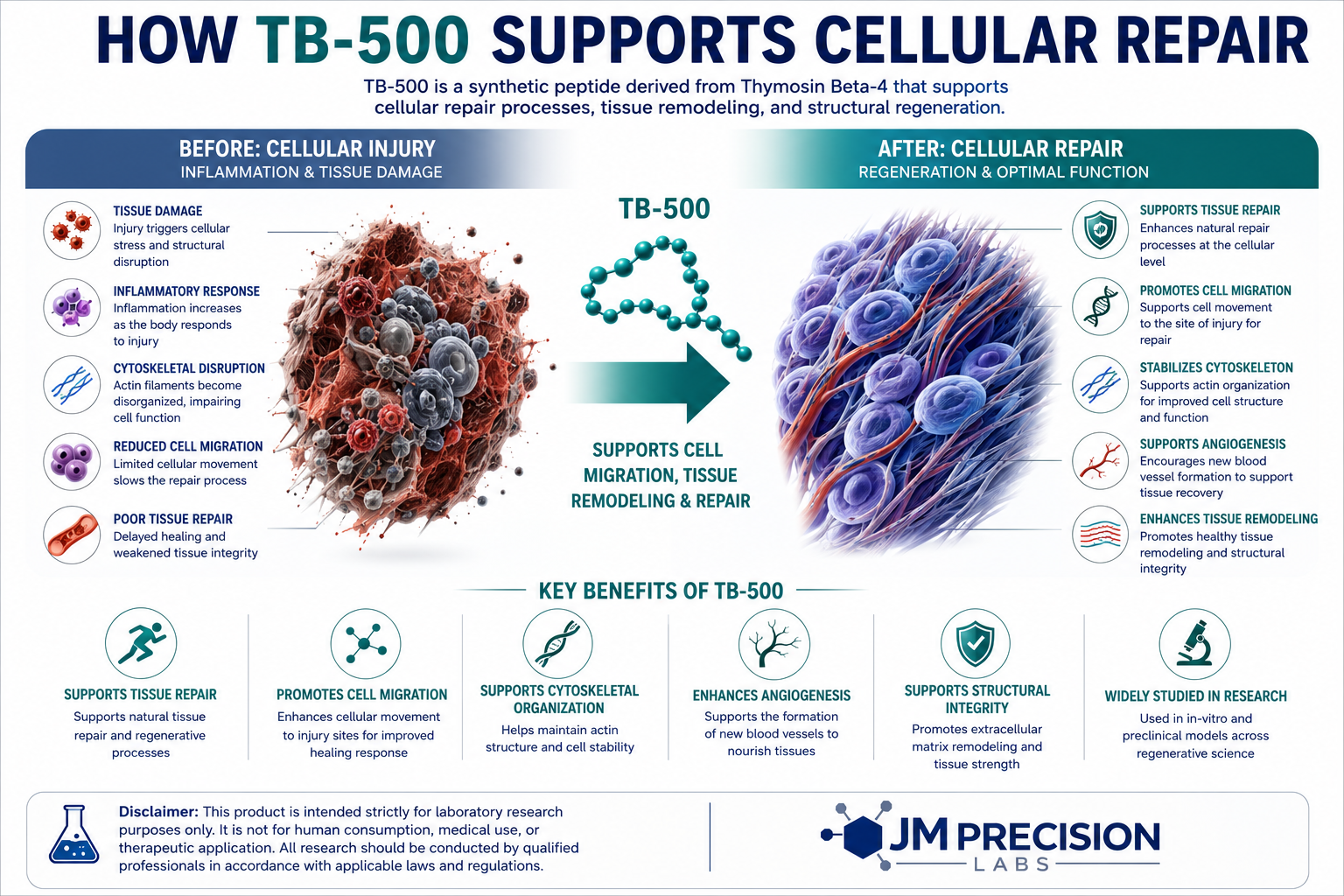
In regenerative science, TB-500 has become one of the most widely studied synthetic peptides due to its relationship with thymosin beta-4 (Tβ4), a naturally occurring protein involved in cellular movement and tissue organization. Researchers continue to investigate TB-500 for its potential role in cellular migration, structural remodeling, and tissue regeneration in laboratory settings.
|
|
TB-500 is a synthetic peptide that represents a functional fragment of the naturally occurring protein thymosin beta-4. It has been extensively studied in preclinical research for its involvement in cellular organization, actin regulation, and tissue remodeling processes.
|
In laboratory environments, TB-500 has been investigated for its interactions with:
|
- Cell migration pathways
- Cytoskeletal organization
- Tissue remodeling mechanisms
- Cellular signaling involved in repair processes
|
Why Researchers Are Interested
|
|
One of the primary reasons TB-500 attracts attention is its role in supporting cellular movement and structural organization. Rather than acting on a single biological target, researchers believe it may influence several pathways involved in tissue remodeling, making it an important subject in regenerative biology.
|
Current areas of investigation include:
|
- Connective tissue remodeling
- Skeletal muscle recovery models
- Cellular migration and organization
- Angiogenesis (formation of new blood vessels)
- Extracellular matrix remodeling
|
Applications in Research Settings
|
Within controlled laboratory environments, TB-500 is commonly studied in research involving:
|
- Tissue engineering
- Cellular repair models
- Musculoskeletal research
- Regenerative biology
- Wound healing mechanisms
Its relationship with cytoskeletal dynamics and cellular migration has made it valuable in studies examining how tissues respond to injury and structural remodeling.
|
- Synthetic peptide derived from thymosin beta-4
- Studied for cellular migration and tissue remodeling
- Investigated in regenerative biology research
- Commonly used in in-vitro and preclinical laboratory models
- Associated with multiple signaling pathways involved in structural repair
TB-500 remains an important subject in regenerative science because of its broad involvement in cellular organization and tissue remodeling pathways. While research continues to expand our understanding, its potential role in structural maintenance and repair mechanisms makes it a frequent focus in preclinical laboratory investigations.
|
|
Disclaimer: This product is intended strictly for laboratory research purposes only. It is not for human or animal consumption, medical use, or therapeutic application. BPC-157 is an investigational research compound and has not been approved by the U.S. Food and Drug Administration for any therapeutic use. All research should be conducted by qualified professionals in accordance with applicable laws and regulations.
|
|
|
|
|
|
|