

Scientific Research Chemical Supply: A Guide to Laboratory Standards and Procurement 2026
Data integrity is not a variable; it’s a constant that collapses under the weight of a single unverified batch. With the Producer Price Index for basic chemicals reaching record highs in May 2026, the cost of procurement failure is increasingly punitive. You understand that inconsistent purity and opaque documentation from international vendors do more than delay timelines. They introduce systemic risk into your research. Securing a reliable scientific research chemical supply requires a transition from passive ordering to rigorous, protocol-driven procurement.
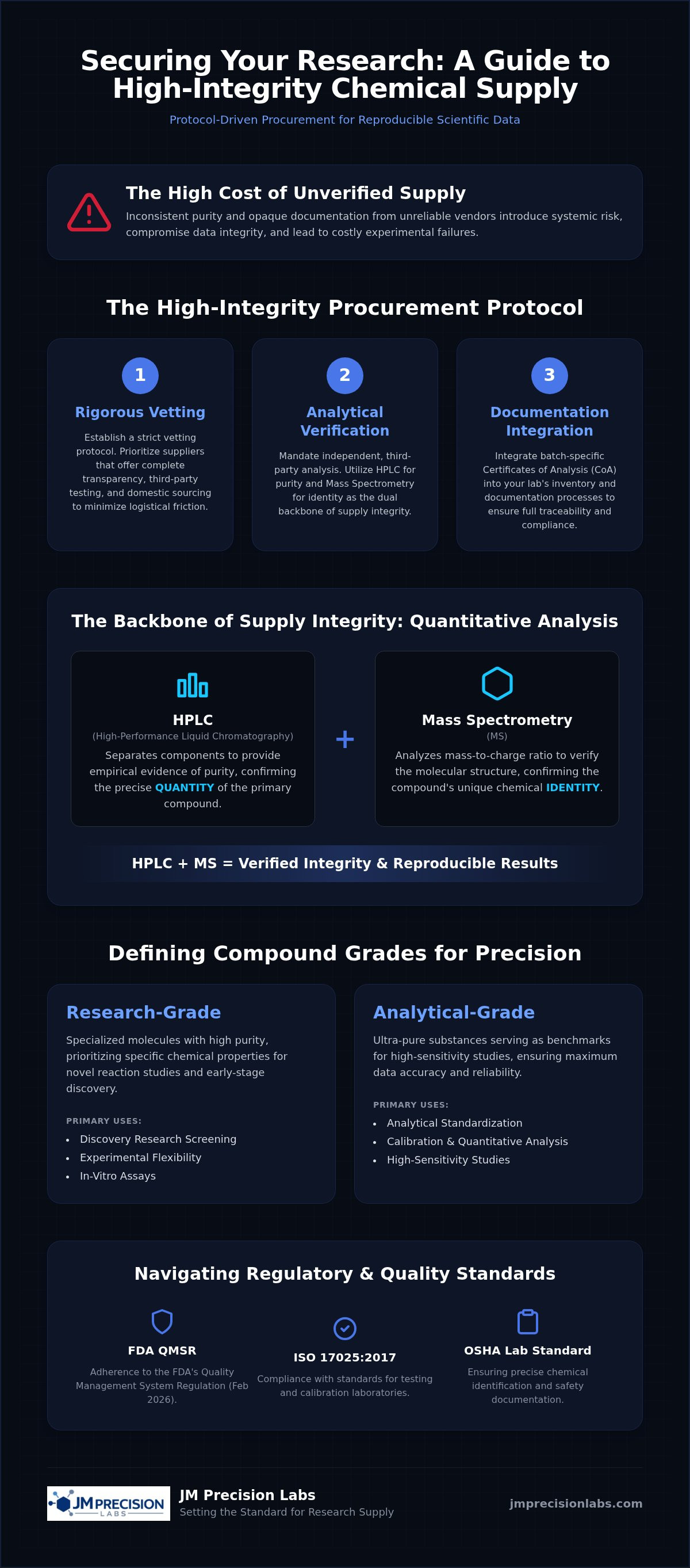
This guide provides an authoritative overview of the verification standards and logistical strategies essential for high-integrity research. We examine the mandatory FDA Quality Management System Regulation (QMSR) implemented in February 2026 and the ISO 17025:2017 standards for calibration. We will detail how to minimize logistical friction through domestic sourcing and ensure data integrity with batch-specific certificates of analysis. Precision is the priority. Verification is the mechanism.
Key Takeaways
- Define the operational boundaries of research-grade chemicals to ensure compliance with in-vitro and analytical study protocols.
- Establish a rigorous vetting protocol for your scientific research chemical supply to ensure complete transparency regarding compound origin and testing history.
- Utilize High-Performance Liquid Chromatography (HPLC) as the primary benchmark for assessing compound purity and maintaining data integrity.
- Optimize procurement workflows by integrating batch-specific Certificates of Analysis into your standard laboratory documentation and inventory processes.
The Fundamentals of Scientific Research Chemical Supply
Integrity in the laboratory begins at the point of procurement. Scientific research chemical supply is the systematic acquisition of high-purity compounds for non-clinical study. These Research chemicals are intended solely for in-vitro and analytical applications. They aren’t for human or animal consumption. This sector is governed by rigorous standards of purity and documentation compliance. Maintaining a rigid supply chain is foundational to the reproducibility of scientific data. Without verified inputs, experimental outcomes are compromised. Precision is mandatory. Verification is non-negotiable.
To better understand the safety and handling protocols associated with these substances, watch this guide:
Defining Research-Grade vs. Analytical-Grade Compounds
Precision requires the correct tool. Research-grade compounds are specialized molecules used in early-stage discovery and testing. They prioritize specific chemical properties for novel reaction studies. Analytical-grade substances serve as high-purity benchmarks. They’re the standards used for calibration and quantitative analysis in laboratory procedures. Selecting the wrong grade introduces unnecessary variables into the study. High-sensitivity studies require analytical-grade precision to ensure data accuracy. Discovery phases often utilize research-grade compounds for experimental flexibility. The choice depends on the specific sensitivity requirements of the study.
The Critical Role of Purity in In-Vitro Studies
Purity is the definitive metric of quality in any scientific research chemical supply. Impurities in a compound can trigger off-target effects. This results in false-positive or false-negative data points that invalidate months of work. Research-grade chemicals must exhibit high stability to ensure outcome reliability over time. Generic or industrial-grade chemicals don’t meet the necessary purification steps for laboratory use. They often contain trace metals, catalysts, or isomers that interfere with molecular interactions. High-integrity laboratories reject unverified supplies. Every batch must be confirmed through rigorous testing. Documented purity is the only path to reliable data.
Consider these purity standards for your laboratory protocols:
- Discovery Research: Requires high-purity molecules for screening and early testing.
- Analytical Standardization: Demands ultra-pure compounds for calibration and benchmarks.
- In-Vitro Assays: Necessitates compounds free from cytotoxic contaminants and metallic traces.
Adhering to these standards ensures that the focus remains on the research variables, not the quality of the supply. It’s the difference between a successful study and a failed experiment.
Analytical Verification: The Backbone of Supply Integrity
Verification isn’t a formality; it’s the final safeguard against research contamination. In the context of scientific research chemical supply, purity isn’t assumed. It’s proven through quantitative analytical techniques. While catalog breadth might appeal to procurement departments, analytical depth determines the viability of the study. Compliance with the OSHA Laboratory Standard requires precise chemical identification and safety documentation. This isn’t just a regulatory hurdle. It’s a technical necessity. Analytical verification must be conducted by independent third-party laboratories. Self-reporting by vendors creates an inherent conflict of interest. Objective data requires an objective source.
Understanding HPLC and Mass Spectrometry Verification
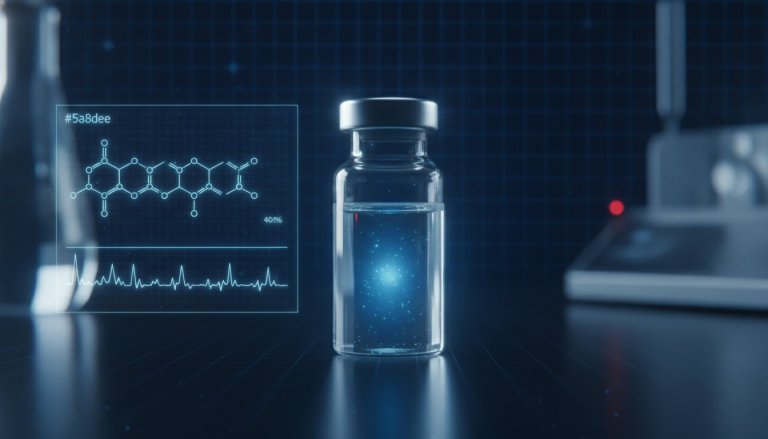
High-Performance Liquid Chromatography (HPLC) is the industry standard for assessing compound purity. It separates chemical components within a sample to measure the precise concentration of the primary compound. If a substance claims 99% purity, HPLC provides the empirical evidence. However, concentration alone is insufficient. Mass Spectrometry (MS) confirms the identity of the molecular structure. It utilizes mass-to-charge ratios to verify the unique chemical signature of the compound. Correlating these two data points ensures the substance is both what it claims to be and at the concentration required. One confirms quantity. The other confirms identity. You need both. Laboratories seeking to implement a repeatable verification framework should review the technical standards for analytical testing research compounds, which details how to interpret HPLC, MS, and NMR data with precision to ensure absolute compound integrity.
Deciphering Batch-Specific Certificates of Analysis (COA)
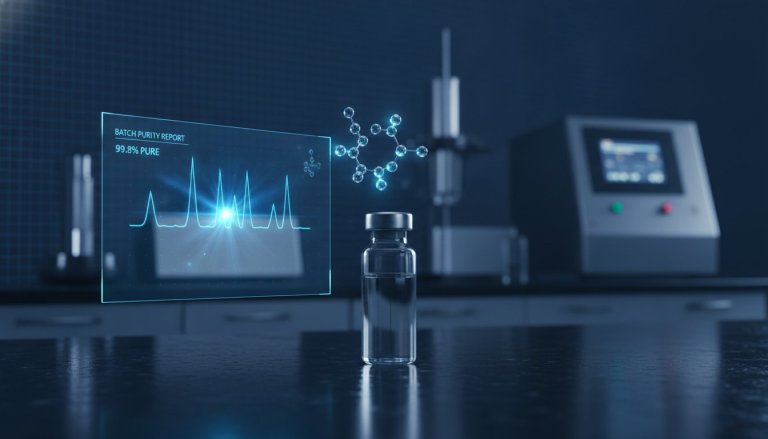
A Certificate of Analysis (COA) is only valid if it’s batch-specific. Many aggregators provide “representative” COAs from previous production runs. This practice is unacceptable for high-integrity research. Every unique synthesis has a unique profile. When you buy research chemicals with COA documentation, you must audit three specific fields: the purity percentage, the date of analysis, and the laboratory signature. A COA dated several years prior suggests degraded stability. A missing signature indicates a lack of accountability. Verify the batch. Protect the study. Researchers who need a structured process for this audit should consult the research chemical compliance standards professional verification checklist to implement a repeatable framework for authenticating COA documentation and supplier credentials.
Reliable procurement relies on these transparent analytical markers. At JM Precision Labs, we prioritize these verification protocols to ensure that every compound meets the rigorous demands of modern science. Transparency isn’t a marketing claim. It’s a procedural standard. We provide the documentation necessary to maintain absolute data integrity throughout your study.
Evaluating Supplier Reliability in the Research Sector
Vetting a supplier is a clinical process. It’s not about the size of the catalog. It’s about the precision of the protocol. A scientific research chemical supply must be transparent. You need to know where the compound originated. You need to know its full testing history. Aggregators often hide behind vast networks of global sources. This introduces unacceptable variability into your data. Verified laboratory suppliers stand behind their specific data. Reliability isn’t a promise. It’s a record of consistent batch purity and met shipping timelines. Adherence to a Laboratory Safety Guide is essential for establishing these procurement benchmarks for a high-integrity scientific research chemical supply.
With the Producer Price Index for chemicals showing a 9.07% annual increase as of June 2026, procurement efficiency is more than a logistical goal. It’s a fiscal necessity. Every failed batch is a sunk cost that your budget cannot absorb. Reliability is measured by the absence of variables. A supplier who cannot provide a transparent audit trail of their verification process is a liability. You aren’t just buying a molecule. You’re buying the certainty that your research is based on accurate inputs. Establishing a disciplined vetting process aligned with rigorous research chemical compliance standards is the most effective way to eliminate supplier risk before it reaches your laboratory bench.
Domestic Sourcing vs. International Procurement Risks
International procurement introduces variables you can’t control. Customs delays are common. Packages sit in warehouses without climate control. Temperature fluctuations during transit degrade compound stability and accelerate degradation. There’s limited accountability when a batch fails. Domestic sourcing eliminates these risks. Transit times are faster. Providers must adhere to U.S. laboratory standards. Real-time tracking becomes a standard expectation, not a luxury. For time-sensitive analytical studies, domestic research compound delivery is the only logical choice. It ensures the integrity of the molecule from the lab to your bench. This resilience is critical given the July 2026 industry focus on localized supply chains to mitigate geopolitical disruptions. Researchers evaluating their options should consult a comprehensive USA based research compounds supplier sourcing guide to understand the full technical vetting framework required for batch-specific compliance.
Third-Party Verification vs. Internal Manufacturer Claims
Internal manufacturer claims are inherently biased. There’s a clear conflict of interest in self-verified purity reports. A manufacturer has a financial incentive to confirm their own quality. Independent laboratory testing provides objective accountability. It removes the vendor’s incentive to overlook impurities. You must verify the credentials of the third-party facility. ISO/IEC 17025:2017 remains the global benchmark for testing competence in 2026. If the supplier can’t name their third-party lab, their data is suspect. Transparency requires naming the verifying entity. It requires a commitment to rigorous self-regulation and procedural accuracy.
The distinction between a chemical aggregator and a verified supplier is accountability. Aggregators prioritize volume. Suppliers prioritize verification. In a sector where data integrity is the only currency, the choice is clear. Don’t compromise your research for the sake of a larger catalog. Choose a partner that values precision as much as you do.
Strategic Procurement and Inventory Protocols
Procurement is a critical path in laboratory operations. A fragmented approach leads to research bottlenecks and data inconsistencies. Establishing a methodical scientific research chemical supply protocol ensures that material availability aligns with study milestones. Effective inventory management must account for specific compound shelf-life and stringent storage requirements to prevent chemical degradation. Without these controls, the integrity of the compound is compromised before the first assay begins. High-precision labs don’t treat procurement as a back-office function. They treat it as a technical requirement. Efficiency in the supply chain is the only way to mitigate the rising costs of chemical manufacturing recorded in 2026.
Managing Bulk Research Compound Acquisition
Acquiring compounds in volume provides a significant technical advantage. Using a single batch for an entire study eliminates inter-batch variability. This is essential for longitudinal studies where even minor deviations in synthesis can skew results. Laboratories should evaluate Bulk Discount Packages to optimize budgets while securing the necessary quantity of a verified batch. Strategic acquisition allows for a consistent baseline across multiple experimental phases. Proper storage is mandatory. Maintaining integrity requires temperature-controlled environments, often involving desiccants or inert gas shielding like argon to prevent oxidation. Precision requires consistency from the first milligram to the last.
Ensuring Supply Chain Transparency and Real-Time Tracking
Logistics must be as precise as the chemistry. Real-time tracking isn’t optional for sensitive materials; it’s a requirement for coordinating laboratory personnel and specialized equipment. High-value instrumentation, such as HPLC or Mass Spectrometry systems, often requires advanced scheduling. Delays in the scientific research chemical supply chain result in idle equipment and wasted personnel hours. Real-time visibility allows lab managers to adjust workflows dynamically based on actual arrival data. This level of coordination is vital for maintaining the strict timelines required by modern research grants.
Transparent sourcing protocols protect the integrity of the supply chain by providing a clear audit trail from the point of origin. Procurement systems must utilize secure checkout and encrypted data handling to protect sensitive research interests. Security and transparency are two sides of the same operational standard. At JM Precision Labs, we integrate these logistical safeguards into every order to ensure your focus remains on the data, not the delivery.
Efficiency in procurement reduces the friction between a hypothesis and its verification. To secure your laboratory’s requirements with batch-specific verification and domestic reliability, buy research compounds from JM Precision Labs and ensure your study stays on schedule.
JM Precision Labs: Setting the Standard for Research Supply
JM Precision Labs operates with a clinical focus on transparency and rigor. We recognize that your data depends entirely on the quality of our inputs. In the competitive landscape of scientific research chemical supply, we distinguish ourselves through a persistent focus on verification. We don’t just sell molecules. We provide empirical proof of purity. Every compound in our catalog is backed by a batch-specific Certificate of Analysis. We prioritize analytical-grade materials for precise in-vitro research. Precision is our baseline. Accountability is our standard.
Our Commitment to Batch-Specific Analytical Rigor
Integrity in the laboratory is non-negotiable. Every compound we provide undergoes a rigorous third-party verification process. We refuse to provide generic or representative documentation. A representative sample is scientifically irrelevant to your specific synthesis. We provide the exact data for the exact batch you receive. This commitment to laboratory-verified research compounds ensures that your results remain reproducible. We believe that professional authority is built through procedural accuracy. If a batch doesn’t meet our internal benchmarks for purity and stability, it doesn’t enter our catalog. We value verification over volume.
Streamlining Domestic Research Logistics
Logistics shouldn’t be a variable in your study. We prioritize domestic U.S. shipping to ensure speed and reliability for our partners. Our protocols are designed for the modern scientific community. We provide real-time tracking and secure handling from our facility to your laboratory bench. This domestic focus eliminates the customs delays and temperature fluctuations associated with international aggregators. For large-scale studies, researchers can access Bulk Discount Packages to maintain batch consistency while optimizing budgets. Additionally, we provide free shipping on orders over $200 in 2026. This minimizes logistical friction and ensures your focus remains on the research.
Reliability is a technical requirement. We act as a disciplined provider that values precision and transparency above all else. By choosing JM Precision Labs, you’re securing a partnership anchored by rigorous self-regulation. We provide the compounds and the documentation necessary to maintain absolute data integrity. Your research deserves nothing less than total verification. We’re here to provide it.
Advancing Research Integrity through Verified Procurement
Data integrity is the only currency in the scientific community. Maintaining a high-integrity scientific research chemical supply requires a shift from passive procurement to active verification. Utilizing specialized resources like Molecular Notes for in-depth data on trending peptides ensures that your research is informed by the latest analytical insights. You must prioritize batch-specific documentation and independent analytical testing to eliminate variables. Relying on representative data or international aggregators introduces systemic risk that your study can’t afford. Precision is a choice made at the point of order. It’s the difference between reproducible results and compromised data.
JM Precision Labs provides the infrastructure for this technical rigor. We ensure every compound is strictly for in-vitro and analytical research use. Our protocol includes batch-specific COAs provided with every order and fast domestic U.S. shipping with real-time tracking. This eliminates the friction of international logistics and the uncertainty of unverified batches. View our catalog of third-party verified research compounds to secure the materials your research requires. Your commitment to precision deserves a provider that shares your standards. Move forward with confidence in your inputs.
Frequently Asked Questions
What is the difference between research-grade and USP-grade chemicals?
Research-grade chemicals are intended for laboratory discovery and in-vitro applications, whereas USP-grade chemicals meet the standards for pharmaceutical use in humans. USP-grade compounds require specific certifications for medical safety and human bioavailability. Research-grade compounds prioritize high-purity chemical properties for experimental accuracy in non-clinical settings. They aren’t interchangeable. Using the wrong grade can compromise study parameters or violate safety regulations.
How can I verify the authenticity of a Certificate of Analysis (COA)?
Authenticating a Certificate of Analysis requires matching the batch number on the product to the documentation provided. A valid COA must include a quantitative purity percentage, a specific date of analysis, and a signature from an independent laboratory. Avoid representative samples that reflect previous production runs. Authentic COAs provide a transparent and verifiable audit trail for your scientific research chemical supply.
Why is third-party testing important for research chemicals?
Third-party testing provides an objective layer of accountability that internal manufacturer reports cannot match. It eliminates the conflict of interest inherent in self-verification where a producer confirms their own quality. Using an independent facility, specifically one following ISO/IEC 17025:2017 standards, ensures that the reported purity is accurate and unbiased. This objectivity is vital for maintaining data integrity in high-precision non-clinical studies.
Does JM Precision Labs provide HPLC data for every batch?
Yes, JM Precision Labs provides batch-specific HPLC and Mass Spectrometry data for every compound in our catalog. We refuse to use representative documentation from previous synthesis runs because every synthesis is unique. Every order includes a Certificate of Analysis that details the precise purity and molecular signature of that specific batch. This ensures your laboratory receives exactly what the analytical data claims without ambiguity.
What are the storage requirements for high-purity research compounds?
High-purity research compounds typically require storage in temperature-controlled, moisture-free environments away from direct light. Oxidation and thermal degradation are the primary risks for compound stability over time. Utilizing desiccants and inert gas shielding can further protect the molecular integrity of the supply. Always consult the specific safety data sheet (SDS) for individual compound requirements to prevent premature degradation of your materials.
How does domestic shipping impact the integrity of sensitive chemicals?
Domestic shipping minimizes the time sensitive materials spend in uncontrolled transit environments where degradation occurs. International procurement often involves customs delays and extreme temperature fluctuations that can degrade high-purity molecules. By utilizing domestic U.S. shipping with real-time tracking, we ensure the compound arrives with its stability intact. This logistical precision is a cornerstone of a reliable scientific research chemical supply chain.
Are these compounds intended for human consumption?
No, these compounds are strictly for in-vitro and analytical research applications and are not intended for human consumption or medical use. JM Precision Labs doesn’t sell human-grade supplements or provide medical consultations. Any use outside of a controlled laboratory setting violates established safety protocols. It also compromises the intended scientific purpose of the material and may lead to hazardous outcomes.
Can I purchase research chemicals in bulk for long-term studies?
Yes, researchers can acquire compounds in volume through our Bulk Discount Packages to ensure batch consistency for long-term studies. Utilizing a single batch for an entire longitudinal study eliminates inter-batch variability that can skew results. This approach optimizes laboratory budgets while securing the necessary quantity for large-scale discovery phases. Consistency is critical for valid, reproducible scientific data across multiple study phases.
Disclaimer
JM Precision Labs – Research Use Disclaimer
All products offered by JM Precision Labs are intended solely for laboratory research and scientific investigation. They are not intended for human or animal consumption, therapeutic use, diagnostic use, or clinical application.
Products sold by JM Precision Labs are for use only by qualified researchers and laboratory professionals who understand the potential hazards associated with handling research compounds. By purchasing from JM Precision Labs, the customer acknowledges that they are acquiring these products for legitimate research purposes only and agrees to comply with all applicable federal, state, and local laws and regulations.
JM Precision Labs makes no representations or warranties regarding the fitness of any product for any particular purpose beyond laboratory research. Customers assume full responsibility for the safe handling, storage, use, and disposal of all products purchased.
The information provided on this website, product labels, marketing materials, emails, or social media is for educational and informational purposes only and should not be interpreted as medical advice, treatment recommendations, or claims regarding the safety, efficacy, or intended use of any product.
JM Precision Labs shall not be liable for any damages, losses, or claims arising from the misuse, improper handling, or unauthorized use of its products.
By accessing this website and/or purchasing from JM Precision Labs, you acknowledge that you have read, understood, and agree to this disclaimer.




One Comment