HPLC Tested Research Chemicals: A Guide to Analytical Verification
If your laboratory relies on a static, generic Certificate of Analysis, are you conducting research or simply guessing? Inconsistent compounds and forged documentation remain systemic risks in the analytical field. You require certainty. Most researchers recognize that high-purity standards are the baseline for valid data, yet many struggle with the lack of transparency from chemical vendors. This guide details the technical rigor behind HPLC tested research chemicals and explains how batch-specific verification ensures the integrity of your work.
We’ll examine the mechanics of high-performance liquid chromatography, provide a framework for interpreting chromatograms, and define the criteria for selecting a high-integrity supplier. Procedural accuracy isn’t optional. It’s the foundation of your results. We’ll discuss current standards, such as USP <621>, and how modern software like Agilent OpenLab CDS 3.0 facilitates data integrity. By the end of this article, you’ll understand how to verify chemical identity with precision and avoid the pitfalls of batch-to-batch variability. Our focus remains on analytical verification. We prioritize transparency over hyperbole. This is a guide for the meticulous researcher who values disciplined, verifiable science.
Key Takeaways
- Understand why high-performance liquid chromatography is the definitive standard for ensuring the chemical purity required for reproducible in-vitro research.
- Learn how to identify high-integrity HPLC tested research chemicals by prioritizing batch-specific verification over generic, non-dated documentation.
- Master the interpretation of chromatogram metrics, such as retention time and peak area, to independently confirm compound identity and concentration levels.
- Recognize the necessity of third-party laboratory verification to eliminate the inherent conflicts of interest found in internal manufacturer reports.
- Establish a disciplined procurement protocol that favors U.S.-based suppliers providing real-time logistical tracking and absolute analytical transparency.
The Critical Role of HPLC in Research Chemical Purity
High-purity standards are the prerequisite for reliable data. High-performance liquid chromatography (HPLC) serves as the primary analytical tool for separating, identifying, and quantifying components within a mixture. It’s the gold standard for verifying compound integrity in the scientific community. Without this verification, researchers risk introducing variables that invalidate their findings. Precision is the baseline. HPLC tested research chemicals provide the transparency required to move from hypothesis to conclusion with confidence.
Distinguishing between chemical grades is critical for laboratory success. Technical grade chemicals are often suitable for industrial applications but lack the refinement necessary for sensitive assays. Analytical grade compounds, specifically those verified through HPLC, provide the documented purity levels required for in-vitro and analytical research. Using unverified materials introduces significant risks. Cross-contamination and synthesis byproducts can lead to inaccurate data and wasted resources. Verification is not a luxury. It’s a procedural necessity.
To better understand the fundamental mechanics of this analytical process, watch this introductory lecture:
Why HPLC is Superior to Basic Chromatography
Traditional chromatography often lacks the resolution to distinguish between closely related molecular structures. HPLC provides sensitivity at the parts-per-million (PPM) level. This allows for the detection of residual solvents or trace synthesis byproducts that lower overall purity. The method is exceptionally versatile. It analyzes non-volatile and thermally unstable compounds that would otherwise degrade under heat-intensive testing methods like gas chromatography. Beyond simple identification, HPLC quantifies the precise mass percentage of the target molecule. This provides a definitive metric for HPLC tested research chemicals that qualitative tests cannot match.
The Impact of Purity on Research Integrity
Minor contaminants often skew analytical results in sensitive laboratory environments. A single percentage point of impurity can act as an unintended catalyst or inhibitor. This results in “phantom” data that lacks reproducibility. The cost of failed studies due to sub-standard chemical precursors extends beyond financial loss. It compromises the timeline of scientific discovery. Establishing a baseline for laboratory verified research compounds is the only way to mitigate these risks. Reliable research begins with verified inputs. Integrity depends on documented verification.
How HPLC Verification Works: The Analytical Process
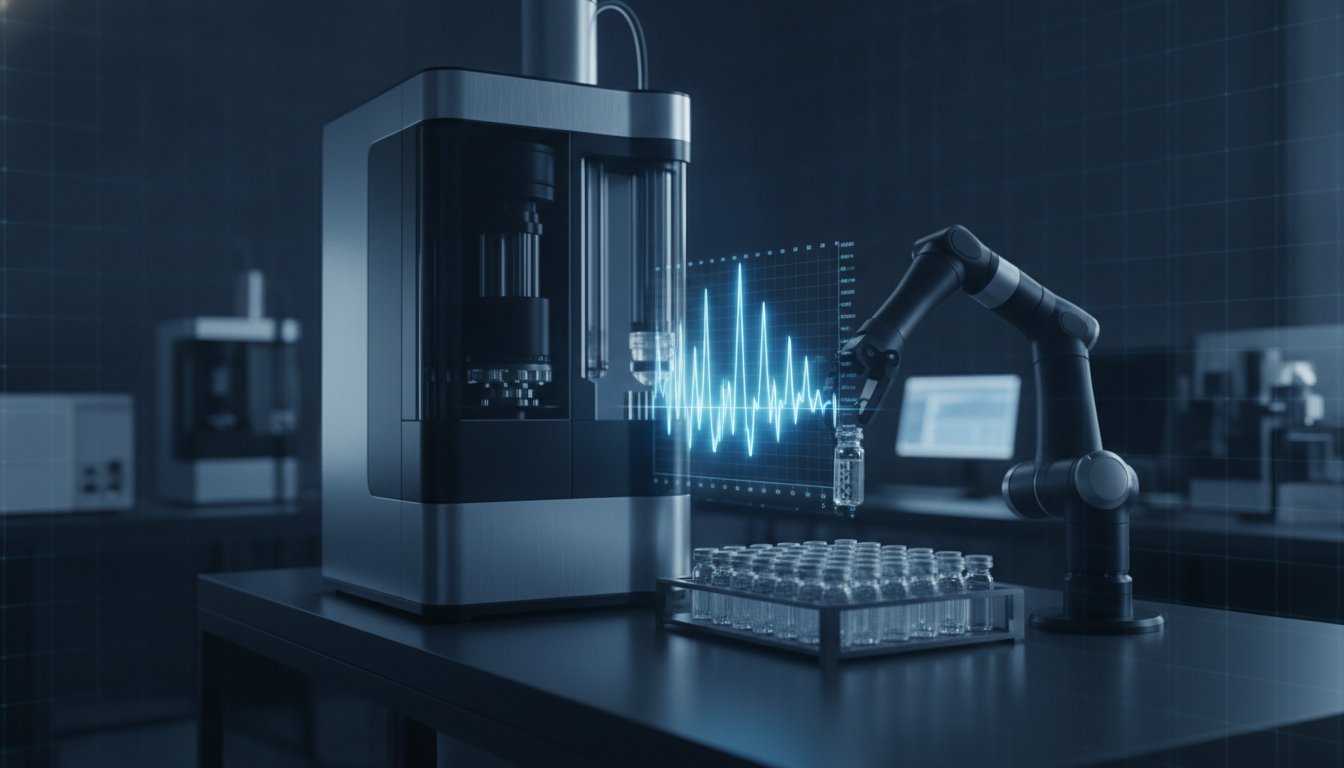
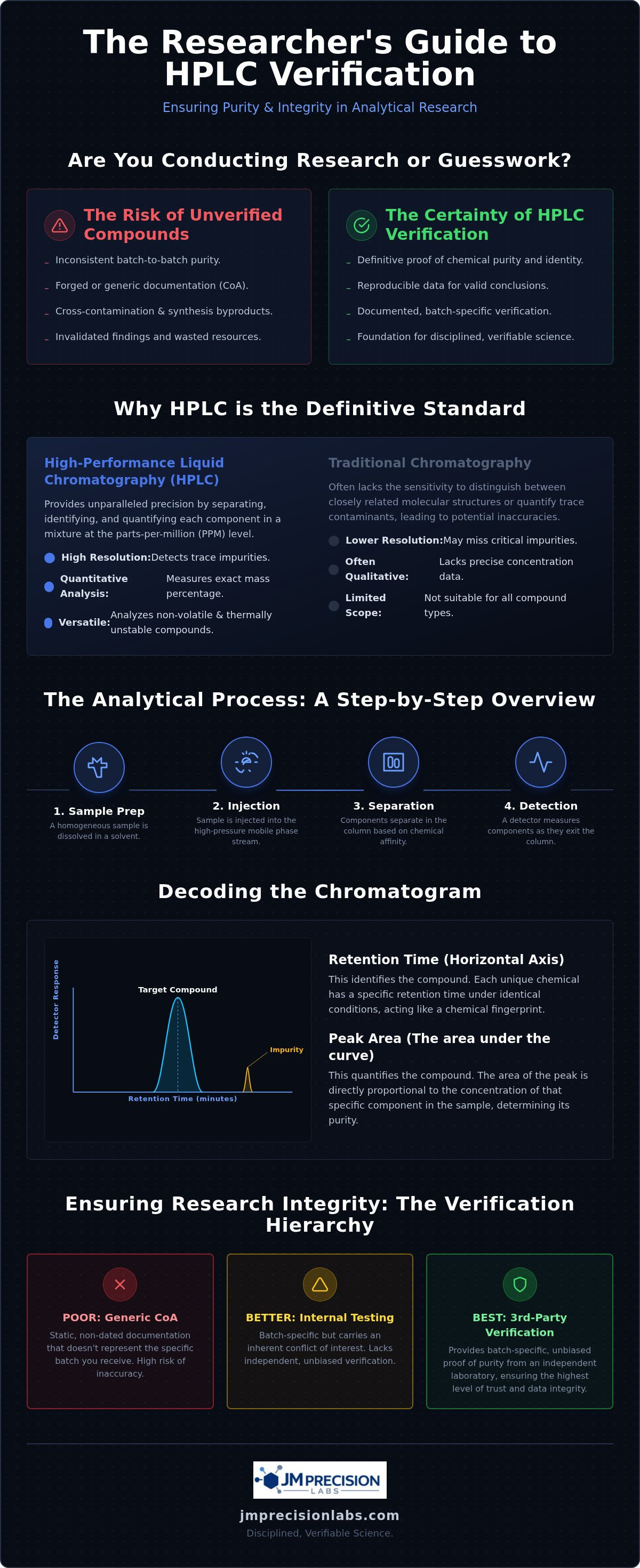
HPLC verification is a methodical process of molecular separation. It relies on the interaction between two distinct phases: the mobile phase and the stationary phase. The mobile phase consists of a solvent or solvent mixture delivered under high pressure. This solvent carries the dissolved sample through the stationary phase, which is a packed column containing specialized chemical adsorbents. The pressure is a critical factor. It ensures a consistent flow rate and allows for the use of densely packed columns that achieve superior resolution.
The core of the analysis is differential migration. Different molecules within the sample interact with the column chemistry with varying degrees of intensity. Components with a high affinity for the stationary phase move slowly. Those with a low affinity exit the column first. This separation allows the system to isolate the primary compound from any synthesis byproducts or residual solvents. It’s the mechanical foundation that makes HPLC tested research chemicals the standard for analytical work. Precision is non-negotiable. Every variable must be controlled to produce a valid result.
Sample Preparation and Injection Protocols
Accuracy starts before the analytical run begins. Sample homogeneity is mandatory. The injected aliquot must represent the entire batch to ensure the data is representative. Professional laboratories utilize autosamplers to maintain procedural consistency. These systems eliminate the volume variability associated with manual injections. Rigorous filtration standards are also enforced. Removing micro-particulates prevents column degradation and ensures the longevity of the stationary phase. These steps ensure that the resulting data reflects the compound’s actual purity rather than preparation errors.
The Role of High Pressure in Modern HPLC
Pressure is the catalyst for resolution. High-performance systems utilize pressure to force the mobile phase through columns packed with extremely small particles. Smaller particle sizes increase the available surface area for molecular interaction. This results in sharper peaks and faster analytical speeds. It’s why “High-Performance” replaced traditional liquid chromatography in professional research environments. The increased pressure allows for the separation of complex mixtures that would remain unresolved in gravity-fed systems. This technical rigor is why researchers who value accuracy source their research compounds from providers who emphasize batch-specific verification.
Detection follows separation. Most systems utilize UV-Vis detectors to identify compounds based on their light absorption characteristics. For high-stakes verification, laboratories often integrate Mass Spectrometry (LC-MS). This provides a secondary layer of confirmation by identifying the molecular weight of the separated components. The result is a comprehensive profile of the compound’s identity and purity. It’s a disciplined approach to chemical verification that leaves no room for ambiguity.
Decoding the Chromatogram: Analyzing HPLC Test Results
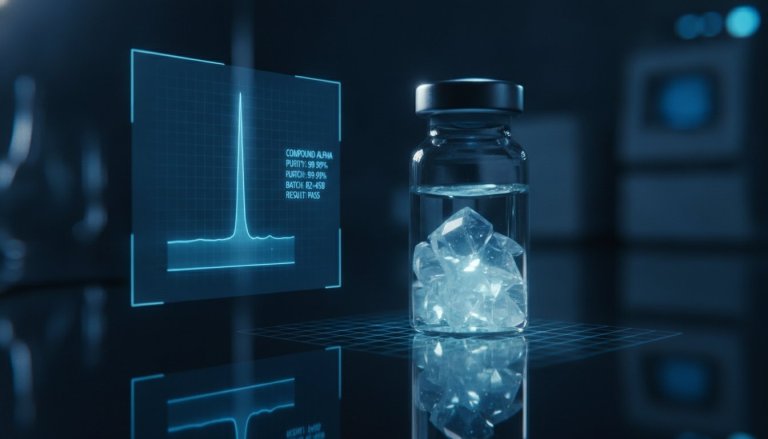
A chromatogram is the definitive data fingerprint of a chemical compound. It provides the visual evidence required to confirm both identity and purity. To interpret this data, researchers must analyze specific analytical markers. Retention Time (tR) is the primary metric for identification. It’s the specific duration from sample injection to the point of maximum peak height. This value is characteristic of a molecule under defined mobile and stationary phase conditions. By comparing the tR against an established standard, laboratories confirm the identity of HPLC tested research chemicals with high precision.
Peak area serves as the foundation for quantification. It represents the total detector response as the compound exits the column. Larger areas correlate to higher concentrations of the analyte. However, the presence of multiple peaks indicates the existence of impurities or synthesis byproducts. Baseline resolution is the measure of separation between these peaks. High-integrity research requires a clear gap between the primary peak and any secondary signals. If peaks overlap, the purity calculation is statistically compromised. Peak symmetry also indicates the quality of the analytical run. A sharp, narrow peak reflects a disciplined methodology. Tailing or fronting peaks suggest column degradation or interfering substances that may skew your results.
Calculating Purity Percentages
Purity determination typically utilizes the ‘Area Under the Curve’ (AUC) method. This involves calculating the area of the target compound’s peak as a percentage of the total area of all detected peaks in the run. For a compound to achieve a 99% purity rating, the report must demonstrate clear baseline separation from trace impurities. Researchers should scrutinize the baseline for ‘ghost peaks.’ These unexpected signals often indicate residual solvents or degradation products. Every peak represents a variable. In analytical research, unidentified variables are a source of experimental error.
Understanding Batch-Specific Documentation
Verification is only valid if it’s current and specific. Every unique production run requires its own batch specific purity reports to ensure consistency. A generic or outdated Certificate of Analysis (COA) is an unacceptable risk. You must verify the analysis date and the laboratory credentials listed on the documentation. Cross-reference the batch number on the vial with the number on the analytical report. If these identifiers don’t match, the verification is void. This level of scrutiny prevents the use of sub-standard materials and ensures that your inputs meet the rigorous standards of modern science.
3Rd-Party vs. Internal Testing: Ensuring Research Integrity
Internal testing by a manufacturer presents an inherent conflict of interest. The entity profiting from the transaction shouldn’t be the sole arbiter of the material’s analytical purity. Independent, 3rd-party laboratories provide the only reliable verification for HPLC tested research chemicals. These institutions operate without a financial stake in the product’s acceptance. They provide an objective assessment based strictly on empirical data. Verification of laboratory credentials is also vital. Reputable facilities adhere to ISO/IEC 17025 standards, which govern the competence and calibration requirements of testing laboratories. Accountability depends on a documented chain of custody for third party tested research compounds. This ensures that the sample analyzed corresponds exactly to the material delivered to your facility.
The Problem with Generic COAs
Many vendors provide “representative” documentation rather than current data. They reuse old reports for new, untested batches to reduce operational costs. This practice obscures batch-to-batch variability and introduces unacceptable risk into your laboratory environment. A generic COA is a document that lacks a direct, verifiable link to the physical inventory it claims to represent. Relying on these documents is a failure of protocol. If the chemical precursor’s purity fluctuates, your results won’t be reproducible. Batch-specific analysis is the only way to confirm that the compound in the vial matches the specifications on the report.
Integrity in 3rd-Party Reporting
Transparency is the standard in professional laboratory supply. High-integrity vendors provide publicly accessible results that researchers can verify directly with the testing facility. The Certificate of Analysis isn’t a marketing tool. It’s a professional pledge of identity and concentration. JM Precision Labs maintains a disciplined supply chain by subjecting every unique batch to independent HPLC analysis. We don’t rely on manufacturer-provided data. Instead, we provide the raw chromatograms and purity percentages required for your internal verification. This procedural rigor eliminates the ambiguity common in the research compound market.
To secure verified materials for your next analytical project, view our catalog of batch-specific research compounds and their accompanying third-party reports. Scientific integrity begins with verified inputs. We provide the data required to maintain that integrity.
Procuring HPLC Tested Compounds for Analytical Research
Sourcing is the final link in the analytical chain. A breakdown in procurement logistics can compromise the most rigorous laboratory protocols. High-integrity research requires a supply chain that prioritizes domestic reliability and analytical transparency. Sourcing HPLC tested research chemicals from U.S. based suppliers minimizes transit variables and potential degradation during transit. Real-time tracking isn’t a convenience; it’s a project management requirement. Time-sensitive laboratory studies depend on predictable delivery windows to synchronize sample preparation with compound arrival. Precision in logistics mirrors precision in the lab.
Scale studies present unique challenges for consistency. Managing procurement for longitudinal research requires bulk verification protocols to ensure that every unit in a large order maintains the same analytical profile. If you’re conducting expansive in-vitro assays, batch-to-batch variability is an unacceptable source of error. Unified testing across bulk inventories provides the statistical confidence necessary for high-volume data collection. Before finalizing any purchase, follow this essential checklist:
- Confirm the presence of a batch-specific COA, not a representative report.
- Verify that the testing laboratory maintains ISO/IEC 17025 credentials.
- Match the batch number on the physical vial to the documentation.
- Ensure the chromatogram displays clear baseline separation.
Selecting a Professional Research Chemical Vendor
Professional procurement requires a shift in focus. You must prioritize analytical rigor over marketing hype. A vendor’s value isn’t found in their website’s aesthetic, but in their commitment to transparency. High-integrity providers don’t hide behind generic data. They provide the raw analytical evidence required for your internal verification. If a vendor cannot provide current, batch-specific documentation upon request, they’re a risk to your research integrity. For a deeper understanding of these requirements, review our verification guide for COA documentation. This resource establishes the standard for professional procurement.
Logistics and Research Continuity
Research continuity depends on a disciplined supply chain. Fast U.S. shipping is essential for maintaining strict laboratory timelines. We understand that delays in material procurement translate to lost time and resources. JM Precision Labs utilizes a streamlined fulfillment process to ensure your materials arrive without unnecessary interference. All compounds are intended strictly for in-vitro and analytical research only. We don’t provide medical advice or consultations. We provide verified chemical precursors for the scientific community. Explore our batch-verified catalog at JM Precision Labs to secure the materials required for your next study. Reliability is our baseline. Transparency is our standard.
Standardizing Analytical Integrity in Your Laboratory
Analytical research requires absolute precision. We’ve examined how the technical rigor of HPLC separation provides a definitive map of chemical purity. Relying on generic documentation is a systemic risk that compromises data reproducibility. You must prioritize batch-specific verification and third-party accountability to ensure your results remain valid. This disciplined approach eliminates the variables that lead to failed studies and inaccurate conclusions. Procedural standards are the only defense against batch-to-batch inconsistency.
Sourcing HPLC tested research chemicals from a provider that values transparency is the final step in establishing a reliable experimental baseline. At JM Precision Labs, we maintain this standard by providing batch-specific COAs with every order. Our third-party verified purity standards ensure your laboratory receives exactly what the report claims. We facilitate research continuity through fast U.S. shipping and real-time tracking. It’s the most effective way to ensure project timelines remain secure and your inventory is always accounted for. We prioritize verification over marketing.
We provide the technical assurances required for high-stakes analytical work. Secure Batch-Verified Research Compounds at JM Precision Labs today. Move forward with the confidence of verified science.
Frequently Asked Questions
What does HPLC tested mean in the context of research chemicals?
HPLC testing means the compound has undergone high-performance liquid chromatography to separate and quantify its various molecular components. This process confirms the chemical identity and concentration of the primary molecule. For HPLC tested research chemicals, this provides a verifiable purity percentage documented on a Certificate of Analysis. It’s the standard for ensuring that analytical experiments aren’t compromised by synthesis byproducts. It allows researchers to quantify the exact mass percentage of the target analyte.
How do I verify the authenticity of an HPLC report or COA?
Verification requires cross-referencing the batch number on the physical product vial with the identifier listed on the Certificate of Analysis. You should contact the third-party laboratory listed on the document to confirm the results are on file. Authenticity is compromised if the report lacks a specific analysis date or a signature from a qualified analytical chemist. Generic reports without batch-specific data indicate potential forgery or outdated testing protocols. Transparency is the only baseline for trust.
Why is 99% purity considered the standard for analytical research?
High purity minimizes the presence of unknown variables in sensitive in-vitro assays. Even a 1% impurity can act as an unintended catalyst or inhibitor, leading to non-reproducible data. Professional standards like USP <621> emphasize resolution and quantification to ensure the material behaves predictably. While 100% purity is technically impossible due to the limits of molecular separation, 99% represents the accepted threshold for high-integrity analytical research and chemical verification. It ensures empirical reliability.
Can HPLC testing detect all types of impurities in a compound?
HPLC is exceptionally sensitive but has detection limitations based on the specific detector utilized. UV-Vis detectors only identify compounds that absorb light at specific wavelengths. Some impurities, such as inorganic salts or specific residual solvents, might require complementary methods like Gas Chromatography or Inductively Coupled Plasma for detection. A comprehensive COA often includes multiple analytical techniques to ensure a complete profile of the material’s identity and purity levels. Multi-modal verification is the gold standard.
What is the difference between HPLC and LC-MS testing?
HPLC separates the components of a mixture for quantification based on the detector’s response. LC-MS (Liquid Chromatography-Mass Spectrometry) adds a mass spectrometer to the end of the HPLC system. This allows the laboratory to identify the specific molecular weight of each separated peak. While HPLC confirms purity percentages, LC-MS provides a secondary layer of definitive confirmation for the molecule’s identity. Using both methods ensures the compound is exactly what the label claims. It eliminates molecular ambiguity.
Is batch-specific testing required for every single order?
Batch-specific testing is required for every unique production run to ensure consistency across the entire inventory. A single batch of HPLC tested research chemicals may comprise hundreds of individual units. Each of these units must be linked directly to the specific analytical run performed on that lot. If a vendor provides a generic or representative report from a different production date, the integrity of that specific order is technically unverified and scientifically unreliable. Precision requires current data.
How long are HPLC test results valid for a specific batch?
Validity depends on the specific compound’s molecular stability and the precision of its storage conditions. Most laboratories recommend re-testing or discarding materials after one to two years. Heat, light, and moisture can cause chemical degradation, which alters the purity profile over time. A COA should always include an analysis date. If the testing occurred more than 12 months ago, you should request a re-analysis to confirm the compound hasn’t degraded in storage. Stability is not permanent.
Are HPLC tested chemicals safe for human consumption?
No. All products are intended strictly for in-vitro and analytical research only. They aren’t human-grade supplements and aren’t for medical use or consumption. The high purity levels verified by HPLC are designed specifically to ensure data integrity in a controlled laboratory environment. Human consumption is strictly prohibited and falls outside the scope of intended research applications. JM Precision Labs doesn’t provide medical advice or consultations under any circumstances. Compliance with these standards is mandatory.
Disclaimer
JM Precision Labs – Research Use Disclaimer
All products offered by JM Precision Labs are intended solely for laboratory research and scientific investigation. They are not intended for human or animal consumption, therapeutic use, diagnostic use, or clinical application.
Products sold by JM Precision Labs are for use only by qualified researchers and laboratory professionals who understand the potential hazards associated with handling research compounds. By purchasing from JM Precision Labs, the customer acknowledges that they are acquiring these products for legitimate research purposes only and agrees to comply with all applicable federal, state, and local laws and regulations.
JM Precision Labs makes no representations or warranties regarding the fitness of any product for any particular purpose beyond laboratory research. Customers assume full responsibility for the safe handling, storage, use, and disposal of all products purchased.
The information provided on this website, product labels, marketing materials, emails, or social media is for educational and informational purposes only and should not be interpreted as medical advice, treatment recommendations, or claims regarding the safety, efficacy, or intended use of any product.
JM Precision Labs shall not be liable for any damages, losses, or claims arising from the misuse, improper handling, or unauthorized use of its products.
By accessing this website and/or purchasing from JM Precision Labs, you acknowledge that you have read, understood, and agree to this disclaimer.